![]() |
|||||||||||||
|
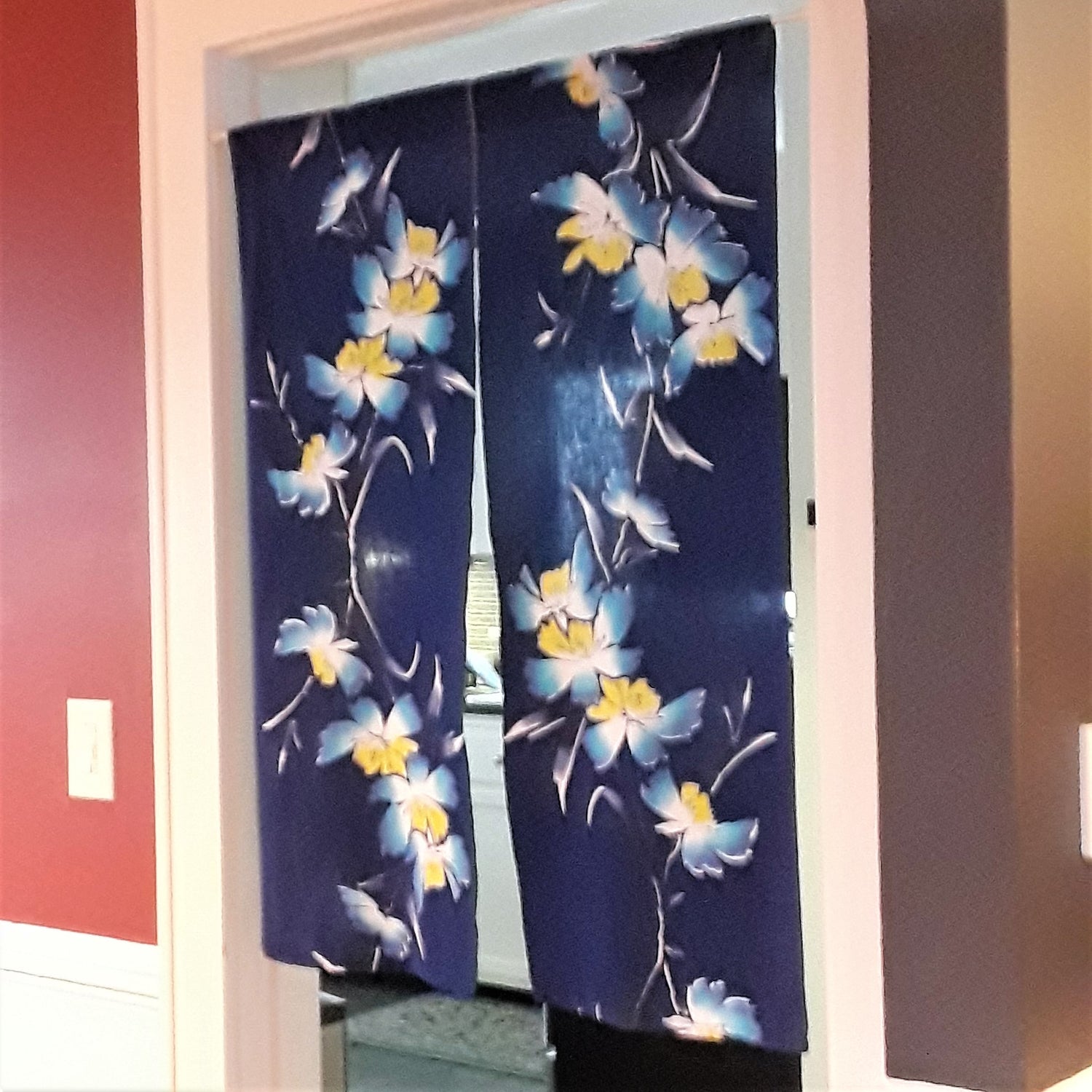
What Do the Family Crests ("mon") Signify? Mon (also called kamon) are symbols and imagery used to identify a family name or institution, similar to the coats of arms in European heraldic tradition. In Japan, mon can be found on many items associated with a particular family, including kimono, fukusa, noren, and even roof tiles of the family home. Mon can also be associated with shrines and temples, and can be found on decorative banners, monk's clothing, and religious instruments. In times past, a mon associated with a ruling lord would be emblazoned on all banners, samurai armor, the castle, ships, and so on. Images used as mons vary immensely. The most commonly seen are florals, leaves, feathers, geometrics, and - more rarely - birds and butterflies. The number of mon found on a kimono indicates the level of formality of the kimono. Casual kimono have no mon at all; one mon (at the back of the neck) is the first level of formality; adding two more (one on the back of each sleeve) indicates the next level; and adding two more (one on each side of the front collar) signifies the kimono is the highest level of formality. Mon were once associated only with nobility, but in the 1800's they began to be commonly associated with families in general. Over the generations, mons were modified, stylized or changed completely according to the taste of the day, so that nowadays it is nearly impossible to make a one-to-one correspondence between a particular symbol and family name. |
Search by Keyword
READY TO SHOP? |
||||||||||||
![]() Copyright © KyotoKimono.com Endicott, NY info@kyotokimono.com |
|||||||||||||